Immediate Peak:
Why Market Trading No Longer Works the Way It Used To
Sign up now
 Immediate Peak


Sign up now
Standard trading strategies can falter because the market’s internal structure constantly shifts. Price behaviour is shaped by concentrated areas of participation, where significant capital exerts influence. These zones can disrupt expected patterns, making traditional setups less effective.
Understanding how these zones develop and how price interacts with them offers insight beyond what simple technical patterns reveal.
Analysing performance across multiple zones allows traders to see the hidden factors behind failed trades, providing a more complete view of why some strategies do not perform as anticipated.
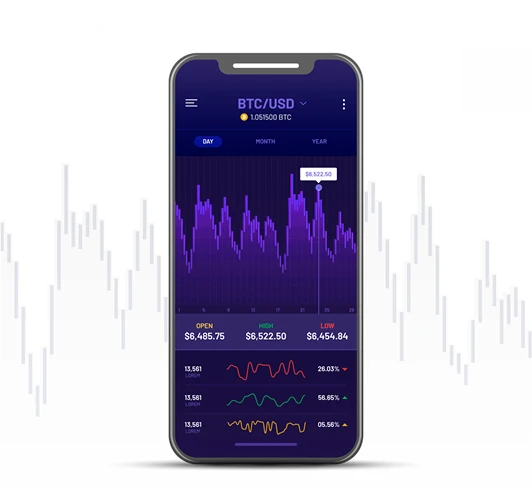
Large market participants operate through gradual strategies instead of one off actions. Their positions often define where momentum carries forward and where price encounters resistance. Observing these moves in parallel with smaller trader behaviour highlights contrasting approaches. Institutions typically establish positions in zones capable of supporting large volume, producing areas where price reacts repeatedly. Understanding how these zones develop explains why certain movements endure while others fade, illustrating that market outcomes are driven more by collective forces than by individual trades Immediate Peak.

Learning often starts with simple questions: why does a trend slow at certain levels? Why do some moves gain traction while others weaken? Structuring these questions helps learners direct their focus and observations.Immediate Peak connects learners to organisations that examine financial systems in real conditions. These sessions highlight core structures rather than only visible price changes. Comparing the formation of liquidity and the progression of order flow guides attention toward fundamental market mechanics. This early exposure builds a solid base for further learning Immediate Peak.

Education in finance benefits those seeking insight beyond surface level movements. Studying how decisions unfold in organised settings clarifies the impact of timing, positioning, and participant engagement. Evaluating differences across participants and asset types offers a deeper view of how markets operate. Tracking outcomes over immediate and extended periods explains why some approaches succeed consistently while others fail.

Learners often start by examining the interactions that drive financial systems instead of isolated results Immediate Peak. Some environments focus on how capital allocation and participant intent shape activity across layers. Evaluating how positions are accumulated and released provides a clearer picture of structural forces at play. Contrasting these behaviours highlights why certain trends sustain momentum while others dissipate.

Learning becomes actionable when resources demonstrate how capital moves and accumulates across financial layers Immediate Peak. Materials focus on how participants engage in different zones and how liquidity affects continuation or pauses. Evaluating activity across varying timeframes highlights differences in decision outcomes. Understanding these patterns helps explain why certain trends persist while others fail. Such structured insight supports a more informed interpretation of overall market dynamics.
Analytical frameworks offer learners a way to study structured decision making. Learning setups often allow comparison of multiple strategies in similar scenarios. These tools help examine how exposure, timing, and positioning affect results. They also show the value of disciplined evaluation, ensuring choices are guided by structure rather than preset routines.
Certain resources focus on managing exposure and assessing behavioural impact on outcomes. In Immediate Peak, these lessons allow evaluation of how positions adapt to changing conditions and pressure points. Studying these interactions uncovers how risk is shared across decisions and how behaviour aligns with structured financial systems, providing insight into practical decision processes.
Educational programmes encourage traders to evaluate decisions as part of a repeatable process. Instead of focusing solely on outcomes, participants analyse the planning and execution of trades, noting how timing and position sizing affect results. This focus on process reinforces disciplined behaviour and strengthens long term consistency.
Understanding how liquidity zones form and how activity clusters across levels gives traders insight into market mechanics. Examining the development of order flow helps identify where momentum may build or stall. This perspective highlights how structured environments guide execution and provide context for interpreting market behaviour.
Structured education shows how various trading approaches perform in different scenarios. Some methods focus on measured exposure, while others pivot based on evolving conditions. Analysing these strategies helps traders understand which approaches consistently support effective outcomes.
Traders are taught to evaluate exposure across multiple contexts. Decisions about scaling, maintaining, or reducing positions are informed by the environment rather than fixed rules. This flexible approach enhances risk management and strengthens adaptive capability.
Education encourages reflection on decision making habits. Traders assess tendencies like hesitation, early exits, or overcommitment to understand their influence on results. Linking behavioural awareness to positioning supports steadier execution and reinforces process oriented discipline.
Structured thinking supports practical application of decisions over theoretical planning. Immediate Peak allows learners to interpret how timing, exposure, and positioning respond to evolving environments. Comparing results across scenarios highlights how methodical execution produces more consistent outcomes than spontaneous reactions.
Following a consistent approach across multiple contexts strengthens execution. Some market conditions demand patience, while others allow step by step participation. Analysing how adjustments work under different conditions helps traders balance discipline with adaptability.
With repeated application, structured thinking enhances predictability in decision making. Traders learn to recognise optimal engagement points, when to pause, and how to modify exposure without destabilising their framework. This approach connects careful evaluation with action, forming a comprehensive trading cycle.

Traders analyse how activity spreads across different market conditions. Dense zones of participation often require measured and deliberate action, while widespread activity encourages flexible engagement.
Understanding these distinctions supports decisions that reflect the true structure of the market, rather than relying on preset routines.
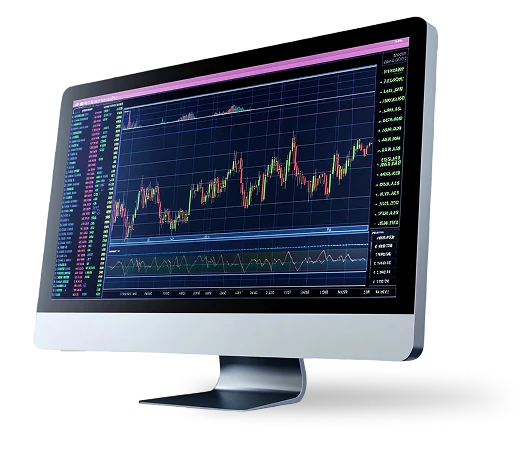
Order flow patterns evolve as markets shift. Focused clusters of activity require careful positioning, while broader movement calls for adaptive methods. Studying these patterns enables traders to adjust execution in line with participation trends, improving the alignment between strategy and market dynamics.
Trading choices are shaped by the broader environment. Evaluating position clustering, capital flow, and engagement patterns allows traders to adjust entries, exposure, and timing. This ensures actions remain methodical and suited to the underlying structure rather than reactive.
Exposure should reflect how participants are distributed. Dense zones require careful sizing and tighter controls, while sparse areas allow measured scaling. Linking risk directly to observed activity promotes disciplined and structured trading decisions.
The pace of engagement depends on participation dynamics. Some conditions call for waiting until zones consolidate, while others permit immediate action. Understanding these temporal differences helps traders synchronise decisions with the evolving market flow.
Mistakes often appear when traders repeat actions without identifying why outcomes differ. By examining timing, position size, and entry selection, participants can separate strategies that consistently work from those prone to failure. This approach reinforces disciplined execution and reduces the likelihood of repeating errors by linking actions to underlying conditions.
Mistakes often appear when traders repeat actions without identifying why outcomes differ. By examining timing, position size, and entry selection, participants can separate strategies that consistently work from those prone to failure. This approach reinforces disciplined execution and reduces the likelihood of repeating errors by linking actions to underlying conditions.
Errors rarely occur randomly. Certain conditions, like initiating positions prematurely or holding beyond optimal levels, often produce recurring mistakes. Comparing decisions in these scenarios allows traders to detect repeatable patterns. Awareness of these tendencies helps align execution with market dynamics, improving consistency and reducing future errors.

Not every environment is suitable for action. Some conditions are scattered, creating setups with ambiguous or conflicting signals. Waiting for clearer activity allows traders to avoid unnecessary risk and make more deliberate decisions based on structure rather than chance.
Trades that appear attractive superficially may lack the participation required for continuation. Assessing how activity behaves in different setups helps traders identify which conditions are meaningful and which are unlikely to support execution.
Deliberate omission of low probability trades encourages disciplined trading. By prioritising well aligned opportunities, participants preserve focus and reinforce methodical behaviour. Over time, selective decision making improves execution quality and maintains a structured approach to trading.

Confidence emerges when traders recognise that their choices align with structured goals. Analysing outcomes under different conditions separates reliable, process driven results from chance occurrences. This reinforces the value of disciplined engagement and a systematic approach to execution.
Traders gain assurance by seeing similar actions yield predictable results. Evaluating patterns of behaviour rather than relying on assumptions allows participants to act with clarity. Repeated verification fosters confidence in executing strategies deliberately and consistently.
Sustainable confidence comes from examining how decisions perform over time, not from short term outcomes. Assessing strategies across diverse scenarios prevents overreliance on recent performance, creating a balanced, process oriented foundation for decision making.

Investment education introduces methods to analyse financial systems, yet live execution requires practical adaptation. Participants assess how timing, exposure, and positioning influence outcomes under changing conditions.
Integrating these observations into active trading allows theoretical knowledge to guide decisions, creating a reliable framework for consistent performance.
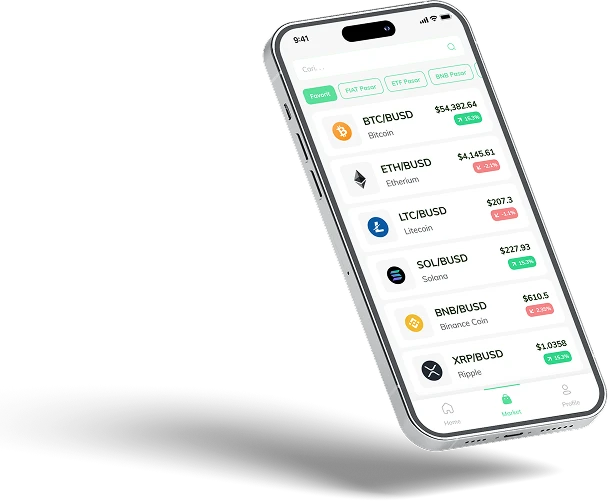
Markets present different patterns, from concentrated participation to scattered activity. Comparing how strategies perform under these differences provides insight into when to act and when to pause. This approach strengthens decision making, reinforcing that trading success depends on context aware application rather than uniform implementation.
Learning alone is not enough; consistent application drives results. Evaluating how timing, exposure, and sequence interact under real conditions helps participants translate knowledge into effective action. This continuous comparison refines execution, ensuring strategies remain aligned with both educational principles and observed market dynamics.
Frameworks guide, but markets often present exceptions. Ambiguous setups or conflicting signals require situational judgement. Understanding where standard rules do not apply fosters flexibility while maintaining methodical execution. This approach encourages participants to interpret conditions independently without abandoning structured thinking.
Successful trading requires connecting conceptual understanding with applied execution. Adjusting exposure, timing, and order sequence in line with both education and context helps participants act deliberately. This approach strengthens structured decision making while maintaining responsiveness to actual market behaviour.
Educational frameworks outline how financial environments function. Turning this into actionable trading involves evaluating position sizing, risk allocation, and sequence of decisions under live conditions.
Comparing outcomes across different scenarios helps participants apply concepts thoughtfully while remaining flexible to evolving markets.
High participation zones emerge where trading activity consistently accumulates over time. These regions are shaped as positions gradually build within defined ranges rather than appearing randomly. Traders monitor price reactions when revisiting these levels to determine whether engagement remains robust or begins to diminish. Recognising these patterns helps participants understand how positioning can influence subsequent market movement.
Different timeframes reveal unique perspectives on the same market environment. Short term horizons highlight immediate positioning, while longer term views illustrate the distribution of capital across phases. Comparing these perspectives allows traders to align strategies with intended durations, avoiding conflicting decisions and ensuring that execution matches the planned scope of participation.
Examining order flow shows how transactions unfold across organised areas of the market. By interpreting these sequences, traders can assess whether participation supports ongoing trends or signals weakness. This approach highlights the influence of structured order execution on market behaviour, rather than relying solely on visible price action.
| 🤖 Joining Cost | No fees for registration |
| 💰 Operational Fees | No costs whatsoever |
| 📋 Registration Simplicity | Registration is quick and uncomplicated |
| 📊 Focus of Education | Lessons on Cryptocurrencies, Forex Trading, and Investments |
| 🌎 Countries Covered | Excludes the USA, covers most other countries |